First, let me say this isn’t just another generic books like The Housemaid article.
After becoming a huge Freida McFadden fan, I started hearing claims that she had copied the story from another author.
Naturally, that made me curious. Were these books really that similar?
What I discovered was that several books share a particular storytelling formula, but each author puts their own spin on it.
Here’s the thing about psychological thrillers: plot formulas aren’t unique to one author. In fact, some of the most popular thrillers follow familiar patterns. A woman enters a seemingly perfect household. Someone starts behaving suspiciously. We’re led to believe one character is the villain, and another is the victim. Then, somewhere along the way, the story flips everything we thought we knew.
Sound familiar?
It’s a classic example of misdirection with unreliable narrators, and it’s one reason I love this genre. The author carefully controls what we know, encouraging us to make assumptions about the characters before revealing that things aren’t quite what they seem.
Now, does that mean every book using this formula is a copy of another? Not necessarily. There’s a difference between using a familiar plot structure and copying someone’s specific story. The characters, their motivations, the circumstances, and how the author reveals the truth are what make each book its own.
And I’ll admit, once you’ve read The Housemaid and a few other thrillers that follow this formula, you may start seeing the twists coming. I know I do. But even when I think I’ve figured out where the story is headed, I still want to know how everything fits together. Sometimes the surprise isn’t what happens, but why and how the author gets us there.
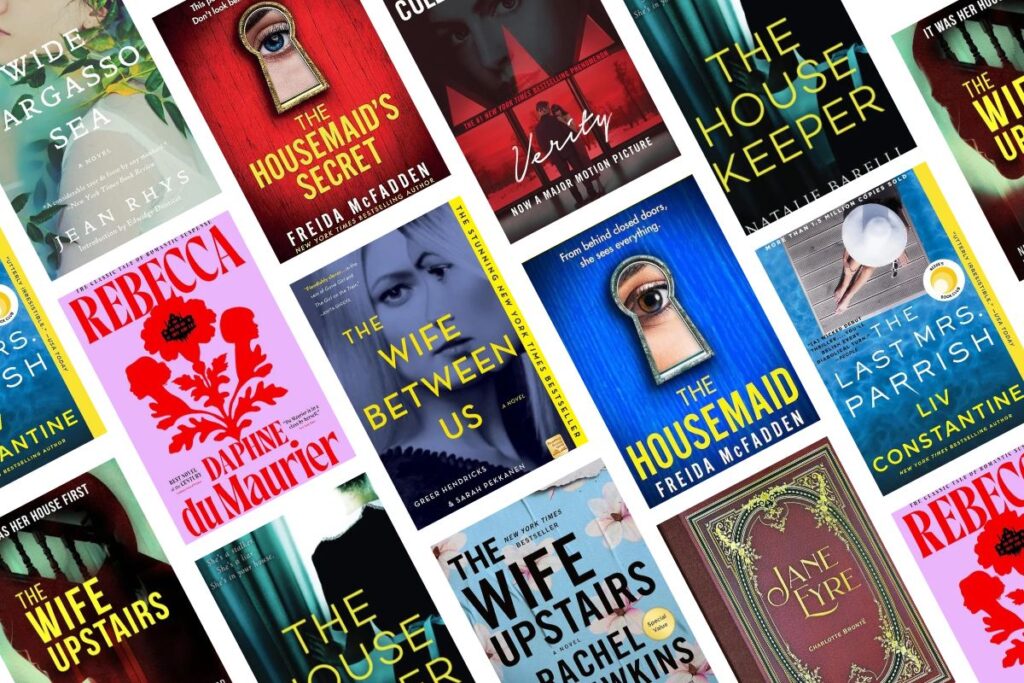
So, if you’re curious about the similarities between The Housemaid and other psychological thrillers, or you’re simply looking for another book that will make you question who’s really the villain, I’ve put together a list of stories that use this familiar formula in their own ways.
And don’t worry, I’ll keep the descriptions spoiler-free. After all, figuring out who’s really who is half the fun.
Books Like The Housemaid by Freida McFadden
In The Housemaid, Millie is desperate for a fresh start when she accepts a job working for the wealthy Winchester family. What initially seems like the perfect opportunity quickly becomes something far more disturbing.
Between Nina’s increasingly strange behavior, Andrew’s seemingly perfect personality, and the secrets hiding inside the Winchester home, it’s difficult to know whom to trust.
What makes the story so entertaining is how quickly your opinions about the characters can change. So, if that’s what you loved about The Housemaid, these books deserve a spot on your reading list.
1. Jane Eyre by Charlotte Brontë (1847)
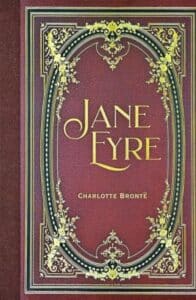
Long before The Housemaid, there was Jane Eyre. Charlotte Brontë’s Gothic classic follows a young governess who accepts a position at Thornfield Hall, the mysterious estate of the wealthy Edward Rochester. As Jane grows closer to her employer, strange occurrences suggest that the household is hiding something sinister.
Sound familiar? A young woman enters a wealthy household, develops feelings for a seemingly respectable man, and discovers that appearances can be deceiving.
What makes Jane Eyre particularly interesting is how the story presents certain characters as dangerous while encouraging readers to sympathize with others. Modern readers may question whether those judgments are entirely fair.
Although it’s not a psychological thriller in the modern sense, Jane Eyre is an influential early example of the storytelling devices that make books like The Housemaid so entertaining.
Best For: Readers who enjoy Gothic mysteries, classic literature, and secrets hidden behind respectable appearances.
Why You’ll Like It: You’ll recognize the wealthy household, charming employer, and mysterious woman whose story isn’t quite what it seems.
Similarity Rating: ★★★★☆
2. Rebecca by Daphne du Maurier (1938)
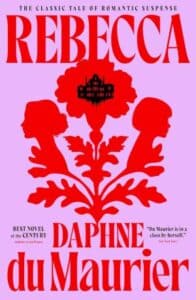
When a young woman marries the wealthy widower Maxim de Winter, she imagines a wonderful new life at his magnificent estate, Manderley. Instead, she finds herself living in the shadow of his first wife, Rebecca, whose presence seems to linger in every room. The housekeeper, Mrs. Danvers, makes it clear that the new Mrs. de Winter will never measure up to her predecessor.
But was Rebecca really the perfect wife everyone remembers?
Rebecca is a wonderful example of how an author can manipulate our perceptions of characters we’ve never even met. As the truth about Maxim’s first marriage emerges, everything we thought we understood begins to change.
Like The Housemaid, this Gothic suspense novel explores a seemingly perfect marriage, a wealthy household, and the unsettling realization that the people we trust may be hiding something terrible.
Best For: Readers who enjoy dark marriages, Gothic suspense, and morally complicated characters.
Why You’ll Like It: The story makes you question your assumptions about a seemingly respectable husband and the woman whose memory dominates his household.
Similarity Rating: ★★★★☆
3. Wide Sargasso Sea by Jean Rhys (1966)
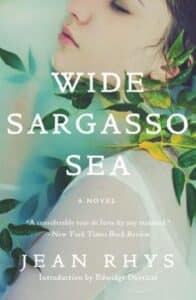
Have you ever finished a book and wondered what the story would look like if the supposed villain got to tell their side? That’s essentially what Jean Rhys explores in Wide Sargasso Sea.
This novel reimagines the life of Bertha Mason, the mysterious first wife of Edward Rochester in Jane Eyre. Set largely in the Caribbean, it follows Antoinette Cosway, a young woman whose marriage gradually becomes a source of isolation, manipulation, and psychological distress.
What makes this book especially relevant is how dramatically perspective can change our understanding of a character. Someone portrayed as frightening or dangerous in one story becomes far more complicated when we learn about their experiences.
Unlike the other books on this list, Wide Sargasso Sea isn’t a conventional psychological thriller. It’s a literary companion to Jane Eyre that explores one of the central questions behind The Housemaid: Who gets to decide who’s the villain?
Best For: Readers who enjoy literary fiction, morally complicated characters, and stories told from an overlooked perspective.
Why You’ll Like It: It challenges the assumption that the woman portrayed as dangerous is necessarily the villain.
Similarity Rating: ★★★☆☆
4. The Last Mrs. Parrish by Liv Constantine (2017)
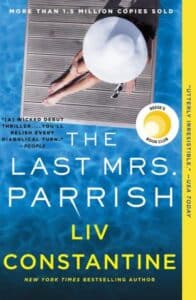
Amber Patterson is tired of being overlooked. When she meets Daphne Parrish, a beautiful woman married to a wealthy and successful businessman, Amber sees an opportunity to claim the luxurious life she believes she deserves. She carefully works her way into Daphne’s world, becoming a trusted friend while secretly pursuing an entirely different agenda.
At first, the characters seem easy enough to understand. Amber is calculating, Daphne appears to have everything, and Jackson Parrish seems like the ultimate prize.
But The Last Mrs. Parrish is a perfect example of why readers shouldn’t rush to judge characters based on their first impressions.
Of all the books on this list, this is one of the closest matches to The Housemaid. Both stories involve wealthy marriages, manipulation, and a carefully constructed narrative that encourages readers to misunderstand the people involved.
Best For: Readers who love dramatic character reversals, wealthy families, and domestic suspense.
Why You’ll Like It: If your favorite part of The Housemaid was discovering that you’d misjudged the characters, this book delivers a very similar experience.
Similarity Rating: ★★★★★
5. The Wife Between Us by Greer Hendricks and Sarah Pekkanen (2018)
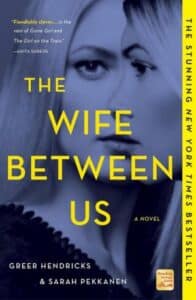
At first glance, The Wife Between Us appears to be a familiar story about a jealous ex-wife who can’t move on. Vanessa’s marriage has ended, her former husband is preparing to marry someone younger, and she seems determined to interfere with their relationship.
But the authors have something much more complicated in mind.
This is one of those books where the assumptions you make about the characters are just as important as the events themselves. The story deliberately encourages readers to interpret certain behaviors one way, only to reveal that the situation isn’t nearly as straightforward as it appears.
If you loved how The Housemaid changed your understanding of its central characters, The Wife Between Us deserves a spot on your reading list. It’s an especially strong example of how perspective and carefully withheld information can completely transform a story.
Best For: Readers who enjoy unreliable perspectives and psychological thrillers that challenge their assumptions.
Why You’ll Like It: You’ll think you understand the relationships between the characters, only to discover that the story isn’t quite what you’ve been led to believe.
Similarity Rating: ★★★★★
6. Verity by Colleen Hoover (2018)
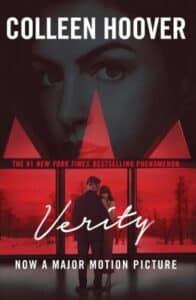
When struggling writer Lowen Ashleigh accepts a job completing a bestselling author’s unfinished book series, she moves into the home of Verity Crawford and her husband, Jeremy. Verity has been left incapacitated following an accident, and Lowen soon discovers a disturbing manuscript that appears to reveal horrifying secrets about the family.
But how much of what Lowen discovers can she actually believe?
Verity takes the seemingly perfect household and charming husband formula in a particularly unsettling direction. As Lowen becomes increasingly involved in the Crawford family’s private lives, readers are forced to question the motivations and credibility of nearly everyone involved.
What makes this book a good match for The Housemaid is the uncertainty surrounding its central characters. Just when you think you’ve decided who deserves sympathy, another revelation makes you reconsider. And unlike some thrillers, Verity leaves plenty of room for debate.
Best For: Readers who enjoy disturbing psychological suspense, morally ambiguous characters, and endings that spark debate.
Why You’ll Like It: You’ll spend much of the book questioning who is telling the truth and whether the characters are as innocent—or guilty—as they appear.
Similarity Rating: ★★★★★
7. The Wife Upstairs by Freida McFadden (2020)
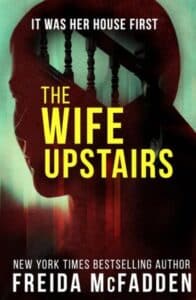
When Sylvia Robinson accepts a job caring for Victoria Barnett, a once-successful author who suffered a devastating accident, she expects a relatively straightforward caregiving position. Victoria is unable to communicate normally, and her wealthy husband, Adam, appears devoted to providing everything she needs.
But Sylvia soon begins to suspect that something about Victoria’s condition—and the Barnetts’ marriage—isn’t quite right.
Like The Housemaid, The Wife Upstairs places a woman inside a wealthy household where the seemingly charming husband and vulnerable wife may not be exactly who they appear to be.
This is one of the most obvious additions to the list because it uses several of the same storytelling devices that McFadden’s readers have come to expect. The fun is in figuring out which characters are being honest, which are hiding something, and whether your first impressions can be trusted.
Best For: Readers who love wealthy-household mysteries, suspicious marriages, and fast-paced psychological thrillers.
Why You’ll Like It: The setup feels particularly familiar to The Housemaid, with an outsider entering a troubled household where the truth about the marriage isn’t immediately apparent.
Similarity Rating: ★★★★★
8. The Wife Upstairs by Rachel Hawkins (2021)
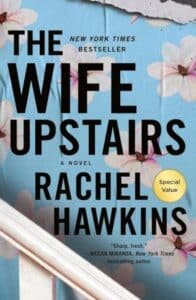
Jane is a dog walker in an upscale Alabama neighborhood when she meets Eddie Rochester, a wealthy widower whose wife, Bea, disappeared under mysterious circumstances. Their relationship quickly develops, offering Jane the possibility of a completely different life. But as she becomes more involved in Eddie’s world, questions about his previous marriage refuse to disappear.
If the names sound familiar, that’s intentional. Rachel Hawkins gives Jane Eyre a modern, Southern Gothic makeover, complete with a wealthy Rochester, a mysterious first wife, and a young woman entering a household filled with secrets.
What makes this book particularly appropriate for your reading list is how it reworks familiar literary elements into a contemporary psychological thriller.
It’s also a great reminder that authors have been borrowing, adapting, and reinventing classic storytelling formulas for generations—and that knowing the inspiration doesn’t necessarily mean knowing how the story will end.
Best For: Readers who enjoy modern Gothic suspense, mysterious marriages, and contemporary retellings of classic novels.
Why You’ll Like It: You’ll recognize the wealthy widower, the mysterious first wife, and the unsettling feeling that the charming man at the center of the story may be hiding something.
Similarity Rating: ★★★★★
9. The Housekeeper by Natalie Barelli (2019)
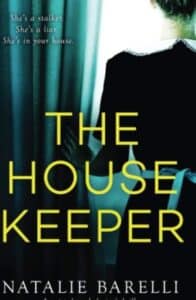
Claire Petersen has a plan. She wants revenge against Hannah Wilson, a wealthy woman whose seemingly perfect life represents everything Claire believes she’s been denied. To get close to Hannah, Claire takes a job as her housekeeper, determined to uncover secrets and settle an old score.
But gaining access to Hannah’s private world proves far more complicated than Claire anticipated.
Of all the books on this list, The Housekeeper shares one of the most recognizable elements of The Housemaid: a woman enters an affluent household with motives that aren’t entirely innocent.
What makes Natalie Barelli’s novel interesting is how the story gradually complicates our understanding of the characters and their relationships. The people Claire thinks she knows may not be quite what they seem.
If you enjoy domestic thrillers built around hidden motives, revenge, and shifting loyalties, this is another one worth considering.
Best For: Readers who enjoy revenge plots, manipulative characters, and domestic thrillers with unexpected revelations.
Why You’ll Like It: The housekeeper isn’t simply an innocent outsider, and the relationships inside the wealthy household become increasingly complicated as secrets emerge.
Similarity Rating: ★★★★☆ (4/5)
10. Count My Lies by Sophie Stava (2025)
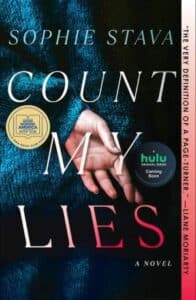
Sloane Caraway has a habit of telling lies. Sometimes they’re small and seemingly harmless. Other times, they completely change the direction of her life. When a chance encounter leads to a nanny position with the wealthy and glamorous Lockhart family, Sloane finds herself living a life she could previously only imagine.
Of course, her new employers have secrets of their own.
Count My Lies is particularly appealing for readers who enjoyed The Housemaid because it starts with a familiar setup: an outsider enters a privileged household, becomes entangled in the family’s private affairs, and gradually discovers that appearances can be dangerously misleading.
The story also plays with an interesting question: What happens when someone who routinely deceives others encounters people who may be even better at it?
If you enjoy psychological thrillers that make you continually reassess their characters, this one belongs on your list.
Best For: Readers who enjoy deceptive narrators, wealthy-family secrets, and characters with questionable motives.
Why You’ll Like It: The story turns the tables on a character who thinks she’s the one controlling the deception, creating the kind of shifting perspective that makes The Housemaid so entertaining.
Similarity Rating: ★★★★★
11. The Housemaid’s Secret by Freida McFadden (2023)
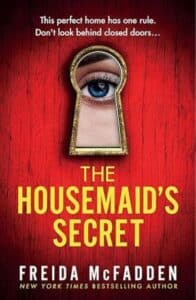
Millie is back, and she’s found another housekeeping job with a wealthy family. This time, she’s working for Douglas Garrick, a successful businessman whose wife, Wendy, rarely leaves her bedroom. Millie is instructed not to disturb her, but strange sounds and troubling clues make her increasingly concerned about what’s happening behind the closed door.
And if there’s one thing Millie has trouble doing, it’s ignoring someone who might need help.
The Housemaid’s Secret is an obvious recommendation for anyone who loved the original novel, but it also deserves consideration because it returns to the same kind of character-driven misdirection.
Once again, McFadden encourages readers to make assumptions about a troubled marriage and the people involved. The challenge is deciding whether those assumptions are justified.
If you enjoyed the original book’s formula, this sequel offers another variation on it.
Best For: Readers who loved Millie and want another fast-paced domestic thriller featuring a suspicious marriage.
Why You’ll Like It: It uses the same familiar setup as The Housemaid, encouraging readers to identify the villain and victim before challenging those assumptions.
Similarity Rating: ★★★★★
12. The Turn of the Key by Ruth Ware (2019)
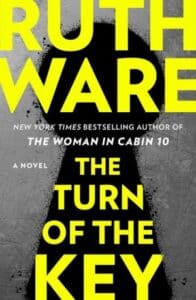
When Rowan Caine accepts a live-in nanny position at Heatherbrae House, the opportunity seems almost too good to be true. The salary is generous, the home is luxurious, and the family appears welcoming. But the isolated Scottish estate is filled with unsettling technology, strange noises, and a history that makes Rowan increasingly uncomfortable.
Then a child dies, and Rowan finds herself accused of murder.
Told through letters written from prison, The Turn of the Key immediately challenges readers to decide whether Rowan is telling the truth about what happened.
Like The Housemaid, it features a young woman working inside a wealthy household where appearances are deceptive, and the people involved have secrets.
Although its central mystery unfolds differently, the novel uses carefully controlled information to challenge readers’ assumptions about its characters. It’s an especially good choice if you enjoy atmospheric suspense alongside psychological misdirection.
Best For: Readers who enjoy atmospheric suspense, unreliable narrators, and mysteries set in isolated mansions.
Why You’ll Like It: A live-in employee, a wealthy family, and a narrator whose account of events may not tell the whole story make this a compelling companion to The Housemaid.
Similarity Rating: ★★★☆☆

Thalia Mercer is a writer covering mystery and thriller fiction, with a focus on book-to-screen adaptations and contemporary reading culture. She writes about why certain stories resonate—and how they translate beyond the page.